
Beetles are the most diverse animals in the world, with
surely over a million species, although only about 350,000 have been described
to date. Any collection of tropical insects contains undescribed species, and
beetles often make up a good part of this, even though they have been favorites
with collectors ever since specimens were first collected for museums.
One explanation for the great diversity of beetles is their
long association with angiosperm plants. It appears that a taxonomic group that
is associated with these very diverse vascular plants has an unlimited array of
niches available for speciation, furnished by both the many different species and
their many parts—leaves, stems, roots, flowers, fruits—on which to specialize.

Long-horned beetles, family Cerambycidae, are strongly
associated with these plants and one of the most diverse beetle families, with about
35,000 species known to date (1,200 or so in North America). Almost all of them
have larvae that bore in plant stems. They are distinguished by—guess
what—their long antennae as well as C-shaped eyes that curve around the
antennal bases. They range in length from a few millimeters to over 17
centimeters and because of their size, beauty, and those looong antennae, are
among the most charismatic and well-liked of beetles.

The family is common in the Pacific Northwest, and some of
the species are striking. A large black and white one, the cottonwood borer Plectrodera scalator, breeds in
cottonwood trees, so look for it along rivers with associated riparian forest. Originally
distributed east of the Rockies, the species has become established in the
Pacific Northwest.
The eggs of Plectrodera
are laid in the fall, and the larvae bore into the bases of cottonwoods and
willows. They pupate beneath the bark and emerge as adults in 2-3 years. The
larvae may girdle and kill trees and are considered a pest in some areas.

The larvae of Monochamus
scutellatus, the white-spotted sawyer, bore into pines and spruces, and
the adults are attracted to trees that have been burned in forest fires. Apparently the
burned trees release chemicals that attract the beetles from long distances.
The species is considered an economic pest because the boring larvae make the
wood, which might otherwise be harvested, unsightly, as well as allowing access
to fungi. Wood-boring beetles cause the timber industry to lose millions of
dollars annually.

The elderberry borer Desmocerus
auripennis lays its eggs in elderberry bushes. The larvae bore in the stems
just like their larger relatives do in trees. The locust borer Megacyllene robiniae is also native to
eastern North America but has spread into the West with the planting of black
locust trees. This and the cottonwood borer are spectacular species, and it’s a
bit disappointing to find out that they came from somewhere else!
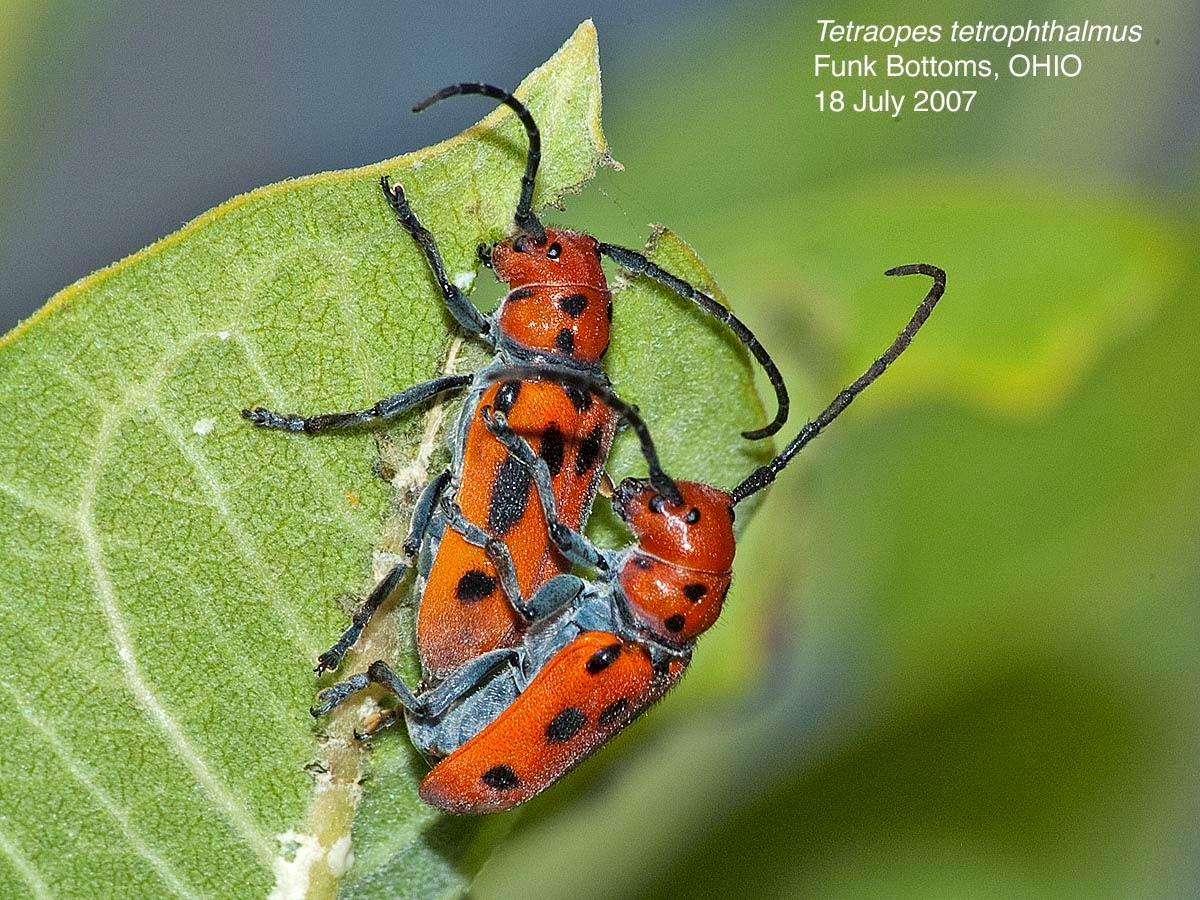
Check patches of milkweed for milkweed beetles, Tetraopes femoratus. A related eastern species
is shown here. The larvae of these beetles live in milkweed stems, and both
larvae and adults are distasteful because of the chemicals ingested with the
milkweed tissue. The bright red coloration is surely an aposematic
advertisement of this.

A very large number of species of cerambycids are flower visitors, eating the pollen and probably in some cases effecting pollination even as they destroy the reproductive efforts of the plant. Lepturobosca
chrysocoma, Pseudogaurotina cressoni,
and Xestoleptura behrensii are
examples of this group. Many are brightly colored and tapered behind, perhaps
giving them some resemblance to bees or wasps, especially in flight. By that
mimicry, they fool some avian predators that normally leave stinging hymenopterans
alone.
Dennis Paulson


